There was a moment in my childhood that shaped everything. I decided then that I’d take care of myself, that I wouldn’t impose on others unless I truly needed to. That choice made me an observer, a reader of people, of moments. It taught me the value of realness and made time a precious thing—only worth someone’s attention if it was serious.
In life, I’ve preferred to be invisible, but not when it came to the brands I led. With each brand, I worked to build a strong core, shaping its unique assets and tying it to a purpose. Brands became my vehicle for change. I wasn’t interested in surface-level influence; I wanted to drive meaningful shifts, to create something lasting for generations to come. That’s what I believe brands—and people—are meant to do.
Then, after 20 years in branding, marketing, and strategy, I was made redundant. That was the moment I decided to become an entrepreneur. But how ready was I?
A marketer versus an entrepreneur is like a tiger in the zoo versus a tiger in the wild. In the zoo, you have a safety net—steady paychecks, supportive sales teams, distribution channels you can lean on. In the wild? No safety nets. To survive, you have to learn quickly, and maybe even more importantly, unlearn just as fast.
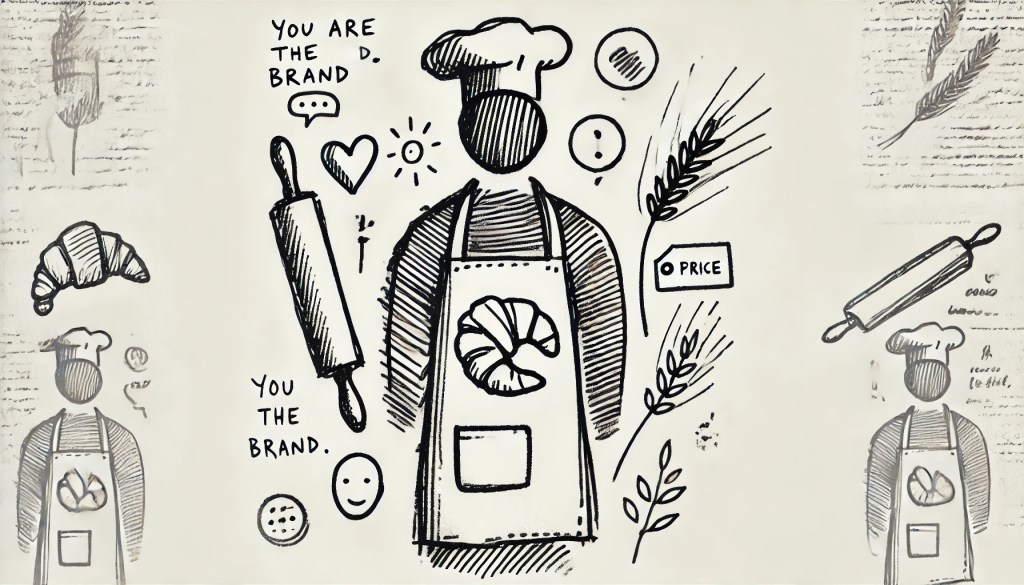
As a marketer, the challenge is to shape a vision that others can adopt. As an entrepreneur, you are the company. You may have a big vision, but without funding, you can’t afford to execute it broadly. Your first job? Make money, because revenue is what keeps you in the game. And that means focus. Great entrepreneurs focus narrowly, mastering a niche before expanding. Being the best in something small beats being “good enough” in something broad. The difference is profound, and it takes patience to get there.
When we launched Be Better plant-butter, we knew we had a great product. But getting chefs to try it wasn’t the same as getting them to buy it. We poured time and money into big industrial bakers, assuming they’d easily swap out dairy butter. We were wrong. The change came from the smaller artisans. They buy in modest quantities, but there are so many of them. That shift forced us to rethink everything—our model, our focus.
In our second year, we pinpointed our target customers, refined how to convert them, and locked in their lifetime value to ensure it exceeded our costs. Now, every day, we put all our energy into this focus. Every day, we say “no” to tempting distractions. Our goal is clear: to be the best in our niche.
If you found this post insightful, I’d love your support. And if you’ve walked a similar path, share your thoughts—I’m always eager to learn.


 BETTER BRAND
Leave a comment